
Changing Skies
Anna Mallikarjunan
One mild day in early autumn, the sky was overcast with soft greyish-white clouds; rain was to come in the morrow. A raven and a seagull were flying high in the sky, arguing with each other against this sombre background. They had the entire sky to themselves, yet chose to be within inches of each other, chiding and taunting one another. On the ground, a remarkable purple-blue butterfly was resting on a blade of grass. A wasp hovered around and prodded it. The butterfly moved away but the wasp followed it as it hopped from one plant to the next. In due course, they parted. Later that week, a mallard visited a small pond near our home for a day. He left the same evening when I also had to endure the annual heartbreak of watching flocks of geese flying south. The departure of these harbingers of spring signalled the coming of the long cold months.
At dusk on a November’s day, a bat was flying along our busy city street against the backdrop of darkening skies. It was like a scene from a vintage movie—his silhouette against the sunset, the shape of his characteristic wings against the light pink sky of dusk. And when winter arrived, squirrels were positively animated: leaping, bounding, and generally displaying high spirits. A bird feeder was installed for the winter; it hung from a tree branch near the pond. Chickadees and nuthatches were flying visitors. They swooped in, picked up seeds and departed. A goldfinch in its brown winter garb often sat on the porch of the feeder, swinging in the wind. He ate a few seeds, then dropped some for the squirrels on the ground.
The landscape of a Canadian winter may appear barren at first, but one soon discovers the contemplative quietness in the silvery grey skies and deep rest in the bare trees. And everyday occurrences can appear miraculous: several hundred ravens gathering on treetops and taking to the air together; a tree lit as if by a fire from the west, its bare branches glowing and basking in the parting evening light of the sun; little footprints of a squirrel across a vast space of fresh snow, leaving you wishing you could have watched him make them; a flock of starlings—their wings glistening in the afternoon sunshine—flying together in frigid temperatures; sunsets that fill the western sky in rapidly changing pools of pink, red and orange hues; and snowfall at dusk when the earth takes on a beauty altogether new.
All the same, I look forward to spring. I wait impatiently for it to arrive, regarding with consternation the Canadian winter’s delaying tactics in March and April, often into May. The appearance of the seagull, one of the first birds to arrive, fills my heart with a warm glow. Their song, perhaps raucous to the musically trained ear, brings melody in the departing cold air. The sight of the first flock of geese winging its way north is breathtaking, hypnotic. Flowers begin to appear out of nowhere: wild purple ones on grassy slopes along city streets; tulips lining posh apartment entrances; and on flowering trees. Many trees that flower in spring are eclipsed by daffodils and tulips or more well-known tree varieties like lilacs and magnolias. But there are some less-known stunningly beautiful, bafflingly fragrant flowering trees. The locust tree, for instance, has flowers that resemble jasmine both in appearance and smell. It carries acres of flower garlands among its branches, hanging gardens in themselves. When the city is brimming with these trees and the air is filled with the perfume of their blossoms, I know that spring is here.
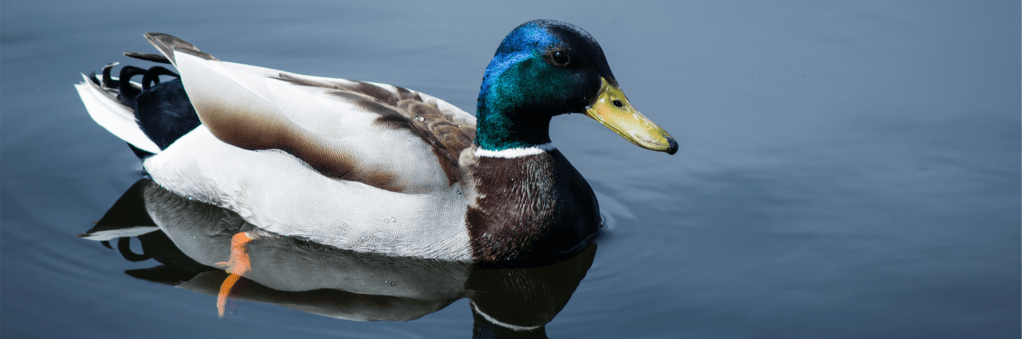
With the coming of spring, mallards appear at the pond near our home in Montreal. Last year, a pair arrived one day in late April. The male—although slightly lame in one leg—was in full expression with his iridescent green head and speculum feathers. He was also fiercely territorial—perhaps his disability had led to a heightened sense of self-preservation. He took great care of his mate, keeping watch over her while she ate from the grassy area around the pond and seeing off competitive males. When she left to nest, he waited patiently, sometimes sitting on a floating log of wood, looking pensive but vigilant. He was absent from the pond the day she returned. But by a coincidence, I was there to witness what turned out to be one of nature’s dramatic events.
It was late one evening and the sky was overcast. I decided to take a walk around the pond with a friend. The chance of a heavy thunderstorm was in the forecast for that evening, but we expected to return home before it began. There was only a slight drizzle when we reached the pond, but then the storm came suddenly and rapidly. Soon the skies flickered with lightning and resounded with thunder. We had not seen such a severe storm in a long while, and I was overawed by nature’s ferocity that day. And amidst this somewhat apocalyptic scene, the mother arrived with one duckling. The heavy rain was so blinding, we didn’t see the two of them enter the pond—they appeared so suddenly. Once she had safely deposited the little one in the water, the mother flew away, then returned, repeating this journey several times. It made me wonder whether she may have had other ducklings with her and was scouring the area for them. While she was away, the lone duckling—tiny and delicate—waded on the water alone, anxiously calling his mother. After several flights back and forth, the mother seemed to give up and rejoined the little one. Rain was still pouring in torrents but fortunately, the newborn was sheltered by overhanging branches of trees that provided cover above the pond.
The male reunited with his family the next day, and upon his return, the weather cleared, bringing sunshine and warmth to the young family. On my walks in the days and weeks that followed, I would see the mallards in their home, eating and drinking what nature provided them with, preening their feathers, and resting. The parents often slept on the bank, and in the water close to them, the duckling snoozed on the floating log his father had once occupied—he was still too small to climb out. And as a lone duckling, he was denied the protection and comfort sibling ducklings can give each other, especially in the initial days and weeks. This little one’s life was earnest right from the day he arrived. But as plucky as he was, he was precious and ethereal. One day in late spring, cottonwood clusters rained down like snowflakes. He looked up from his perch dreamily, his little beak following the movement of the white flecks. There was something dreamlike and delicate in his movements.
Spring is a time for joy but sorrow often accompanies it in equal measure. Every year, I witness the migration of mallards. New families are born. Ducklings grow together, flourishing under the loving guidance of their mother. Once they learn to fly, they spread their wings, take to the skies, and follow the migratory flight paths of their ancestors. But this natural cycle is not without its mishaps. It can be curtailed by one of nature’s many manoeuvres or quite often, by human intervention. One evening in June of that year, I spotted the two parent mallards at one end of the pond. The drifting log of wood was on the water nearby but their duckling was not on it. He was still missing the following day and a tangible void was left by his absence. The bereft parents lingered for a few days, then one day, they too were gone, and the pond lost something of its vitality. The little duckling’s time on earth may have been fleeting, but it was intensely real. And in that short time, he had created a mythical world for me to inhabit—one of perfection, beauty, and peace.
Anna Mallikarjunan
Anna writes from her love for the natural world, lessons from her journey through illness and trauma, and gratitude for the wisdom of the ancients. Originally from South India, Montreal has been her home for the last two decades.

Photo credit: Håkon Helberg
 Apricot Press