

Afterbirth
By Kelley Dundas
Entonox pumps through the hose into my lungs. I inhale so deeply I feel pressure from my organs, fighting against my ribcage for more space. I am high as a kite and refuse to let go of the hose except to vomit, which happens on every third or fourth contraction. Twenty-eight hours in. One contraction a minute. Fight. Fight. Fight.
Finally, it is time to push.
‘You’ll know how to do it when the time comes; your body knows,’ my baby group leader said.
My body does not know.
‘Let’s try some pethidine,’ the midwife says.
‘No pethidine,’ I gasp.
‘I really think it would help you,’ she insists.
‘No pethidine,’ my husband says. ‘It is literally the only thing written in her birth plan. It’s an opioid and passes through the placenta. No.’ Thank goodness I have a man who can repeat what I have said (and written) so it can mean something.
Three more hours. The sharp metallic smell of bile hangs in the room.
He is out. Closely followed by nearly two litres of my blood. The midwife hits the panic button, and in seconds, the room floods with people. Canulas in both hands and forearms, no idea what is going into my body, and I drift away. Outside,
London floods from a month’s worth of rain in under an hour. Genesis. Exodus.
Twenty-four hours later, they release me from the hospital with a prescription for iron tablets and a pack of contraceptive pills.
‘You’re a fertile Myrtle right now, love, best be safe.’ Wink.
Safe? That is how you keep me safe?
Feeding is not going well. I don’t have enough milk, because my body is fighting to replace all the blood I lost. ‘Don’t give up on breastfeeding,’ says the midwife, ‘think of the baby.’ All I do is think of the baby.
A lactation consultant introduces me to her Foolproof Plan to increase my milk supply and ensure I am the perfect mother who exclusively breastfeeds her child. ‘Put him on you to feed every two hours for forty-five minutes. Then pump each side for twenty minutes. Everything needs to be washed and sterilised between each session. Oh, and the two-hour window starts from when you first put him on you, not when you finish pumping. And the cycle continues through the night.’
I have an economics degree, so I can perform perfunctory maths. The Foolproof Plan leaves me two to five unscheduled minutes between feeding sessions, depending on how quickly I can turn everything over in the steam steriliser. Twenty-four hours a day. For four weeks.
Things are not improving (obviously), and I steadily weaken. The next idea to ensure I remain the perfect mother is to get an off-label prescription for Domperidone to medically increase my milk supply. It would be a hideous failure to have to supplement with formula before my son is three months old.
Two days on Domperidone and I wake in the night with palpitations. My heart is pounding so hard my husband can see its beat through my pyjamas. Panic steadily rises in my belly as the distance between my son and me increases on
the way to the hospital. I spend ten hours in A&E and miss five consecutive feeds and pumping sessions. And yet, my breathing is easier in the waiting room than it has been since my baby was born. There is nothing to do but wait to hear
my name called, and I have no control over when they call it. Relief. Release. Quiet. They think I may have had a heart attack.
When I am finally back home, my midwife says, ‘Breastfeeding is all about supply and demand. If you’re missing feeds, your supply just won’t catch up.’ I understand this (economics degree). I also understand that I have ruined the
Foolproof Plan by landing in A&E because of a known side effect of off-label Domperidone use that was not made apparent to me. Remind me, who is keeping me safe? Are they going to take him away from me if my body cannot
feed him? My voice, my self, quiets within me.
This is not working. Where does my commitment to picture-perfect motherhood end, and total insanity begin? And is it me who is insane? I have entered a parallel universe. Nothing moves the way I expect it to. The only truth I know comes in the hardest, darkest, loneliest hours of the night when my son fixates on me with deep, curious eyes, as if there is nothing else in this galaxy but us and the moon and the static of his noise machine. Maybe there isn’t. The moment catches my breath. Then the surety of that truth and the weight of his innocence hollow me out.
Then the visitors come. Each brings a different colour and size of the same soft Jellycat bunny. Grey, white, maroon, royal blue, cobalt blue, sky blue, sky blue with stars, slate grey with spots. Everyone coos over the baby and how well we
are managing and I smile through it all while a dull ache settles behind my eyes. The conversation moves on, (‘have you seen the damage from the flooding?’) and I withdraw to the kitchen and worry about the state of my brain. Something
alien and mechanical seems to be in control right now. I cannot hold the thread of a conversation or bear the energising movement and joy around me. But then my son looks at me, and I know, this… I can hold.
My six-week check-up at the health centre consists of a visibly hungover 22-year-old doctor who pulls up a series of questions on his computer with ‘Yes/No/Discussed’ tick boxes next to each.
‘Are you exclusively breastfeeding?’ he asks.
‘No, not exclusively, I’ve had to start supplementing with formula. I, uh, lost a lot of blood and I’m still hoping—’
He cuts me off. ‘So you’re not, okay.’
No. Tick.
‘Has your period returned?’
‘No, not yet,’ I say. ‘I wonder if maybe it will when I stop breastfeeding? I’m not sure how—’
He cuts me off again. ‘It’ll come back soon.’
No. Tick.
‘Are you using contraception?’
‘Oh, that’s not even on the table. I do have some hormonal pills from the hospital, but I’m not worried about getting pregnant again right now…’ I cannot believe that question made it into the top five.
‘Great,’ he says.
Discussed. Tick.
‘And how’s your mental health?’
Right. Can this hardly post-pubescent man-child possibly cope with the extent of my mental distress? Can he even begin to comprehend the utter terror of responsibility I feel burrowing into the marrow of my bones? Or the knowledge
that I am completely alone on this earth, protected by no one, but idolised by the one human who is the source of my cracking mind, body, and reality? If I answer honestly, does he have the power to take my baby away from me? To label me with postpartum psychosis and have me sectioned? He does, and we both know it.
‘Volatile,’ I decide. Relatively safe, but somewhat honest.
‘It’ll get better,’ as if he knows.
Discussed. Tick.
Down the list we go, until he determines I am ready to be released from the maternity support unit and officially stand on my own as a mother. As every 22-year-old man should have the power to decide.
I walk and shush my way back and forth from my son’s wicker basket of stuffed animals to the ice blue bookshelf by the door. I do not know the time or day but I can still count backwards from one hundred. Perhaps this time, when I reach
zero, he will stay asleep when I put him into the Moses basket. Outside, I see a fox trot down the middle of our street. He pauses to sniff a banana peel, then licks at the remains of a burger. Something spooks him and he freezes, then looks directly up at me. We are both suspended in the moment, both motionless. So I do still exist.
Months later, I rock my son while giving him his midnight bottle. His hair, so fine and fair, looks ethereal in the moonlight. I touch the soft velvety skin between his collar bones, trace the shape of his ear. He gurgles and stretches, then splays his
toes so I can see how tiny the nails are on each one. I run my thumb along the wrinkles of his ankles and wrists, mesmerised by his little body. I think of the water that baptised him and doused the flames that baptised me.
Matrescence, the concurrent wrenching turmoil of transforming into a mother, is as lethal as it is reverant. In a string of hard, quiet, despairingly lonely moments I allow myself to be still and feel the weight of it all, leaving me in wonder. Simply amazed to find myself whole.
Kelley Dundas
Kelley Dundas is a British-American writer who grew up reading Mary Oliver in the Green Mountains of Vermont. She formally began studying creative writing at fourteen, and has since joined writing retreats and workshops in coastal Maine, on Block Island with the former state Poet Laureate at Hygeia House, in Marin County north of San Francisco, in
Brooklyn, and over the last ten years, in London. Kelley continued to write alongside a corporate career before she resigned last summer to look after her young family. Kelley’s maternal experience galvanised her to pursue her writing again with fervour, focusing on motherhood.
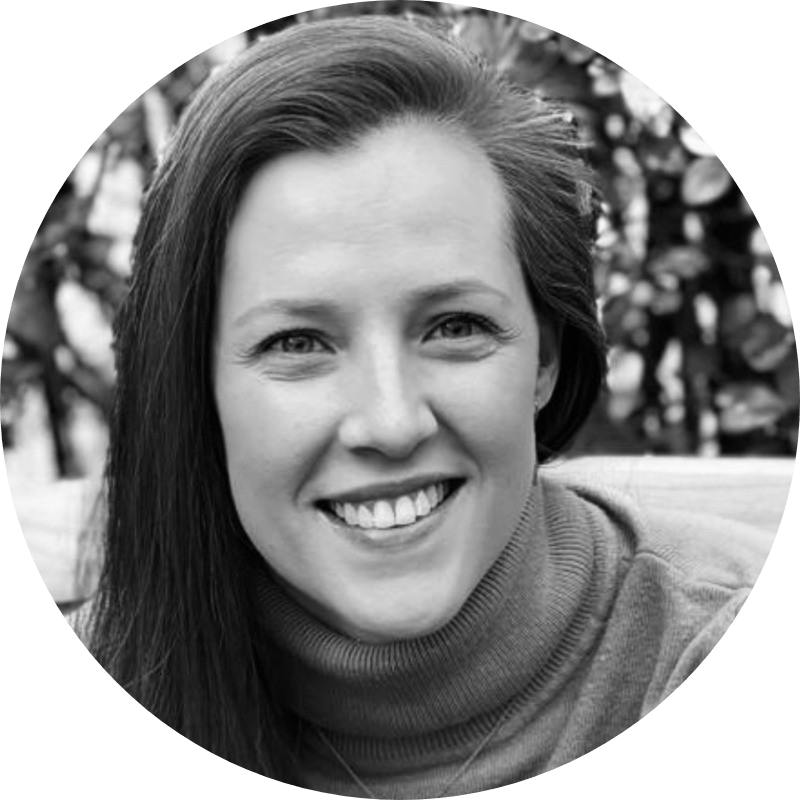
Photo credit: Alex Glebov
 Apricot Press